

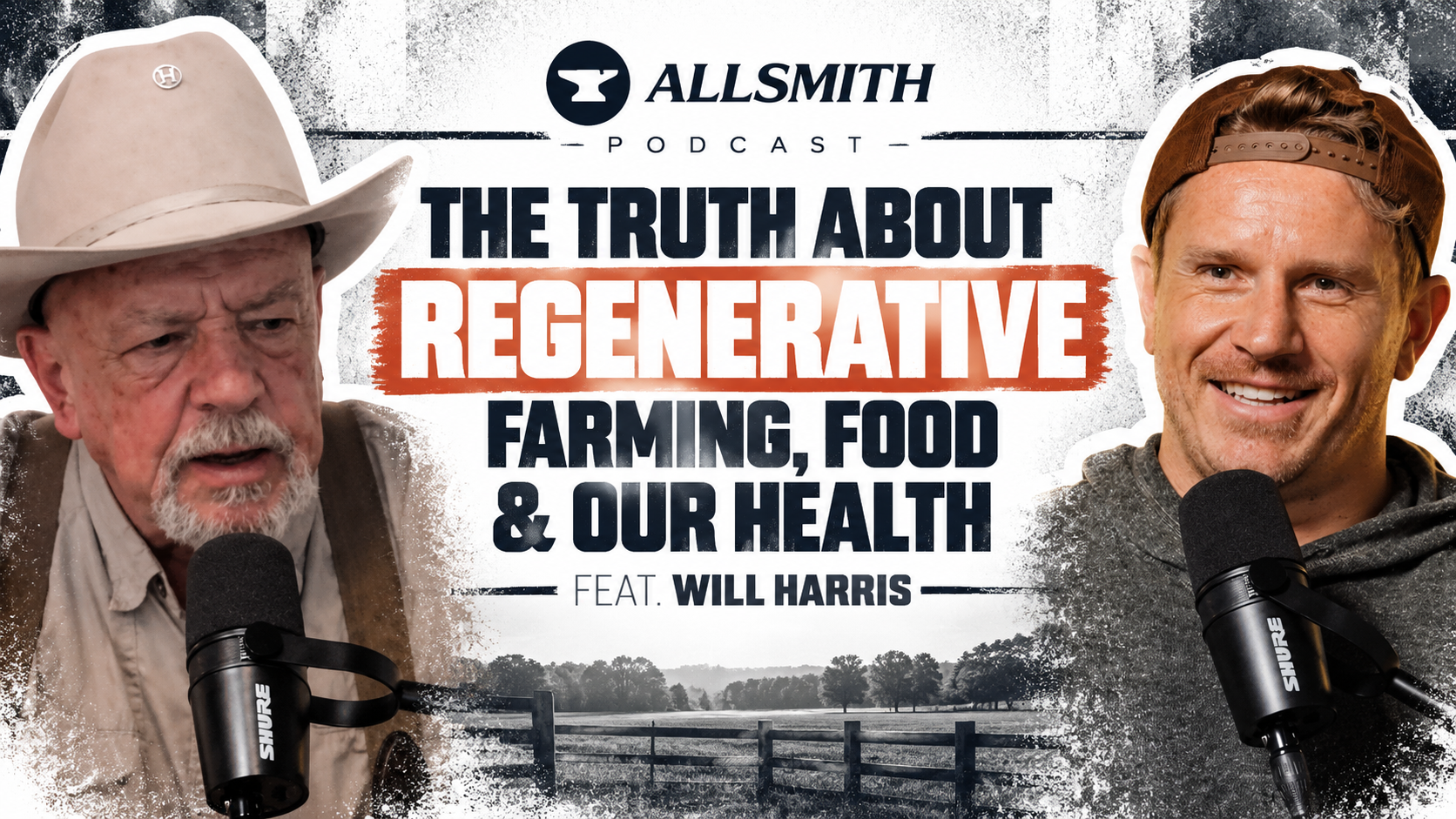
Will Harris, fourth-generation cattleman and owner of White Oak Pastures in Georgia, on walking away from the industrial farm he inherited and learning to keep things alive instead of killing them.
Will Harris is a fourth-generation cattleman and the owner of White Oak Pastures, a 3,200-acre farm in Bluffton, Georgia. He is the only child of an only child, and he says he never wanted to be anything else. While other kids wanted to be baseball players or police officers, he wanted to run his father's farm.
So he ran it the way his dad did, industrially. One animal, cattle only, sold off to the feed lots down the line. He studied animal science at the University of Georgia, came home, and turned a profit and paid taxes every year for twenty years. He was comfortable, and he had no financial reason to change a thing.
Then the excesses of the system started taking the joy out of it. His animals could not graze, root, or scratch the way their instincts told them to, and he says he and his dad never once thought of that as a problem. The land was not fine either. Heavy tillage, chemical fertilizer, and pesticides had him walking his pastures every day looking for something to kill.
“I go to my same pastures every day just like I used to. But instead of looking for something to kill, I’m looking for ways to keep what’s out there alive.”
Getting there meant going against everything his father had built. His dad was a child of the Depression who held on to the farm when most of his neighbors lost theirs, and he told Will never to borrow against it. Will's first loan became three million dollars, for a slaughter plant. He lost money for years. Some nights he woke up picturing his father, who by then had dementia, coming back to ask what he had done. He knew he would not have a good answer.
He does not tell it as a story of genius. He calls his risk tolerance ignorance, and he says he got lucky. He had changed how he raised cattle before grass-fed beef became something people talked about, and he sold Whole Foods, Publix, and Kroger the first pounds they marketed as American grass-fed beef. He believes that timing saved him from financial ruin.
Twenty years later, he says, the organic matter in his soil has gone from about half a percent to five and a half. A little town that was failing now has a weekly payroll of well over a hundred thousand dollars, in a county Will says was the poorest in America in 2020.
The Lesson
The things you are surest about can be wrong. Will and his father truly believed their animals were well cared for. They were fed, watered, and never hit. It took years to see what they had missed. He says the problem was never that he did not care. He just never thought about it.
Think in generations, not quarters. His banker and accountant look at the month, the quarter, and the year, and by that math his return on investment is poor. Will says the farm is profitable and pays its bills, and the rest of the return shows up in the soil, the town, and the people who get to stay. He asks what the farm needs to look like for his grandchildren, who would be the sixth generation.
And do not swing too far. When Will quit vaccinating his animals completely, he lost calves to black leg, a disease that lives in his soil. Now he gives that one vaccine and nothing else. Letting young animals die goes too far, he says, and so does giving them everything every time. The answer sits between the extremes.
“I am thinking generationally. I'm not thinking about the month, the quarter, or the year.”
Will Harris
The conversation also gets practical for anyone who buys food. Will does not put much faith in labels. He dropped his own organic certification when the USDA let greenhouse tomatoes grown in water count. His advice is to learn what you can about the farm and the farmer, and to ask three questions: how the animals are treated, what the operation does for the land, and what it does for the town around it.
He is seventy-one and says he will never retire. His book is A Bold Return to Giving a Damn, and you can find it, and the farm, at whiteoakpastures.com.
This Week's Question
What are you sure is fine only because you have never looked at it closely?