

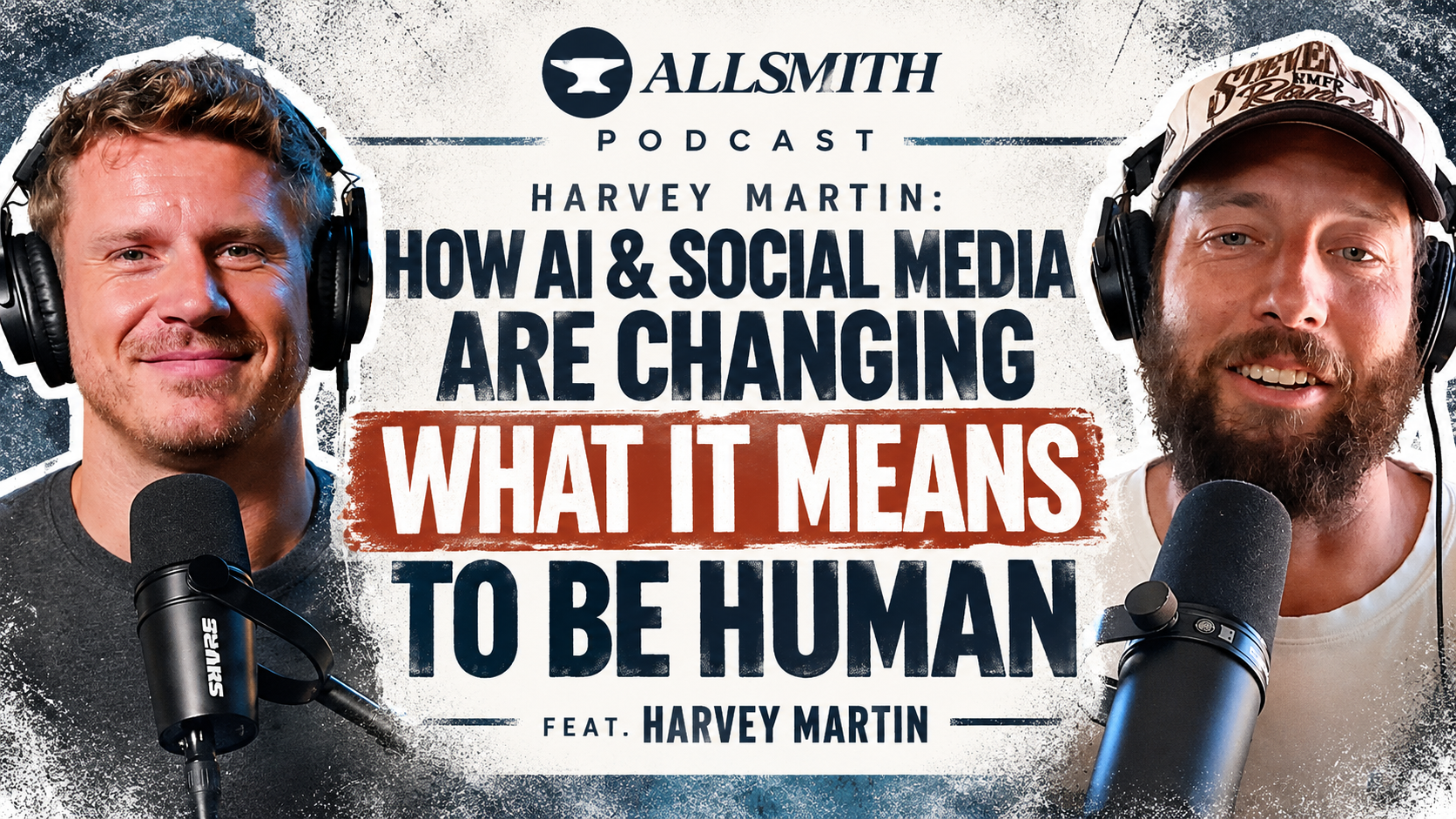
Harvey Martin, breathwork coach and author of Remembrance in the Digital Age, on why the most performative thing you can do is stop performing.
Harvey Martin spent years getting very good at sounding like an expert. He was a professional ballplayer until performance anxiety, the yips, got him released. He turned the frustration into a mission. He studied sports psychology, breathing, and physiology, and at thirty-one, with no minor league or college coaching experience, he landed on a major league staff.
About three years in, in the middle of a meeting, something broke open. He realized he had become a master at performing. He could talk alveoli, carbon dioxide, hypoxia training, and diaphragmatic movement with the best of them. But a lot of it, he says, was a collage of other people's books, science, and research, packaged because he knew what would sell.
Then came an October when he was told he was not going back to Major League Baseball. His wife was expecting their first child within three months. They were renting a friend's house, they were about to lose their health insurance, and he was the only one bringing in money.
“Honey, I’d rather make the wrong decision than no decision.”
He could not sleep that night. At three in the morning he got up and started working on a business, with no idea what he was doing. Around five, his wife walked out, groggy, and asked what he was up to. That was what he told her, and then he told her he was going all in.
That business is what he has done for the last couple of years, guiding breathwork, coaching performance, and writing. His son Oliver is almost two, and a second baby is only weeks away. Part of the conversation is about what a dad's job is in those early months, when, as Harvey puts it, you are mostly irrelevant, and your job is to hold the home steady.
The Lesson
The most performative thing you can do is stop performing. Harvey says the best work he ever did came from play, from the most present and honest version of himself, not from the borrowed expertise he had packaged so well. It is what he tells the athletes he coaches now.
Decide, even when you are scared. Fear is what kept him awake that night, and he used it to get moving. He also says the resistance you feel is often pointing at what you are meant to create, because it is easier to be performative than to be you.
And make the thing for yourself first. Harvey has been podcasting for almost ten years and writing since he was twenty, often feeling like he is talking into a void. He says he has never written a book for the audience or the money. It is a rep in saying something out loud and checking whether it is close to what he actually feels.
“Information doesn't move without emotion. If you have no emotional connection to the knowledge, you won't change.”
Harvey Martin
The rest of the conversation runs from fatherhood to the printing press. Harvey grew up delivering the Detroit newspaper, when millions of people read the same headline. Today, he says, every household has its own algorithm and its own headlines, and the shared reality has come apart. His book argues that we are at the start of a digital age and have not yet built a container for it. His answer is not to go back. It is to carry analog habits like breath, presence, and play into a digital world.
You can find his books, including Remembrance in the Digital Age, on Amazon, and everything else under Harvey J. Martin.
This Week's Question
What decision have you been avoiding that you would rather get wrong than not make?