

Get outside before you get online.
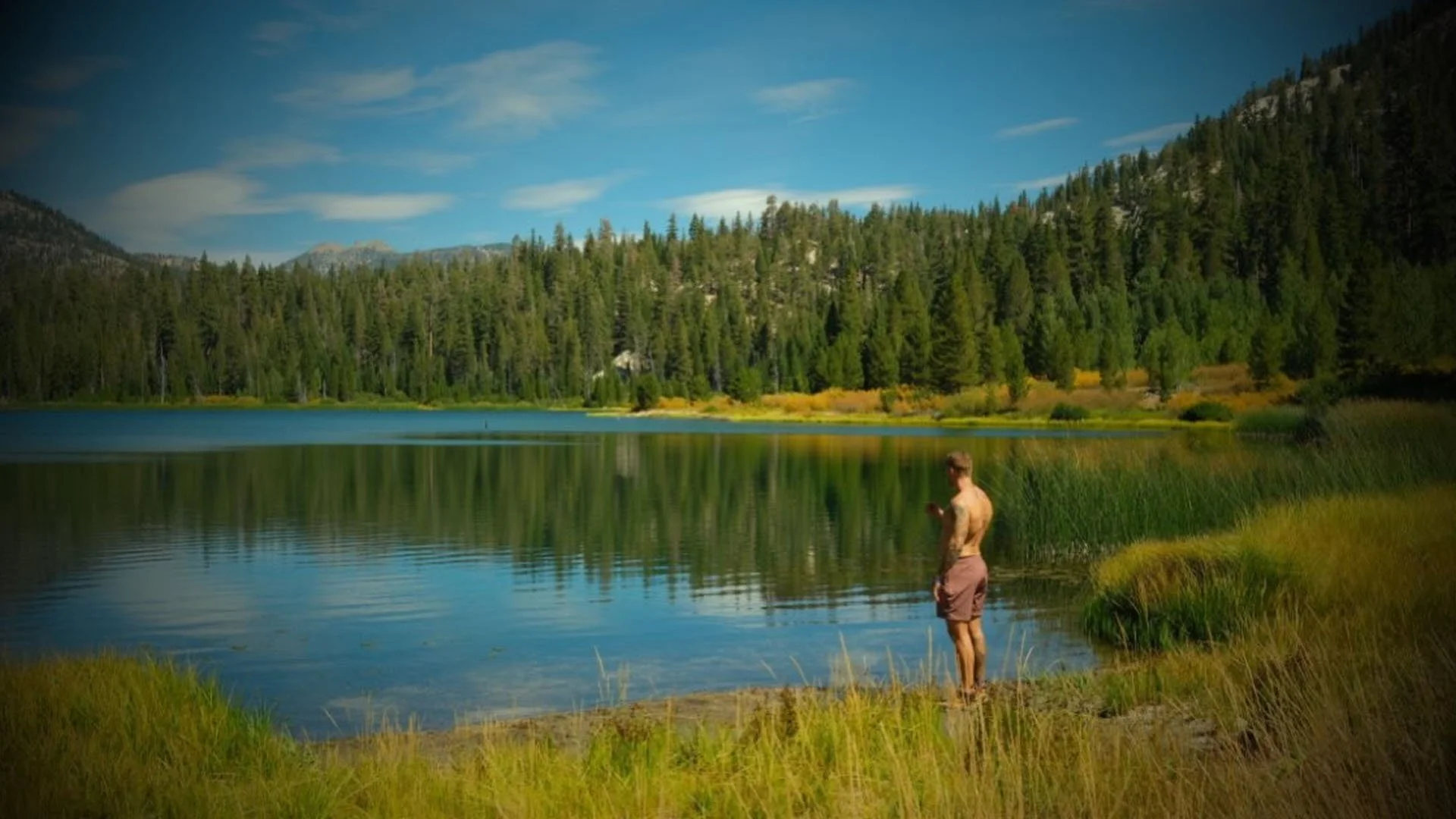
A solo episode from five days off the grid — and the question I came back still sitting with: what if some of the things we call inconveniences are actually medicine?
I just got back from five days in the mountains. No service. No email. No way to scroll or check in or work. My parents used to carry me up there in a backpack when I was two. It's the place I've always felt most alive.
This trip had yellow jackets. A lot of them. Got stung a couple times. Smoke in the face from the fire. Cold mornings, hard ground, bugs in the food. The usual.
And every single one of those inconveniences made me feel more human than I've felt in months.
“We’ve spent so much of our modern life engineering discomfort out of our existence. But I genuinely wonder if we’ve accidentally engineered out some of the things that make us feel most alive.”
Nature doesn't add stimulation. It removes it. You can't scroll through a forest. You can't skip ahead to the next thing on a trail. You have to be there, with your feet on the ground, paying attention — or you fall.
And in that forced presence, something happens. The thoughts that have been running on a loop in the background start to surface. The things you've been too busy to feel start coming through. The body remembers things modern life makes us forget.
Most of us wake up and immediately hand our nervous system to our phone. We go from dead sleep to full cortisol spike in about ten seconds. Then we spend the rest of the day trying to recover from that start.
If you're constantly navigating based on fear — putting out fires, making it to the pillow at night — you're not living. You're existing.
The Lesson
The simple health practices — morning sunlight, deep breathing, walking, sleeping in rhythm with the day — aren't sexy enough to sell. Nobody's building a brand around going outside and taking a breath. So we skip them in pursuit of more advanced solutions.
But we can't out-optimize a foundation that isn't there. And for most of us, the foundation isn't complicated. It's just consistently avoided.
Simple does not mean easy. The advice that changes your life is usually the advice you already know and aren't doing.
Nature is medicine. And once a year — at minimum — I think you owe it to yourself to go take the prescription.
This episode goes deeper into morning routines, circadian rhythm, barefoot culture, why 20,000 steps might be the most underrated health intervention available, and how to microdose the outdoors when you can't disappear into the mountains for a week.
I'm not speaking from a high horse. The advice I give is usually the advice I need. But there's an awareness factor that I've noticed — when I live in alignment with these values, my life is better. Simple as that.
This Week's Question
What if some of the things you've been calling inconveniences are actually medicine?