

Finding the Program That’s Perfect for You and Your Body Type
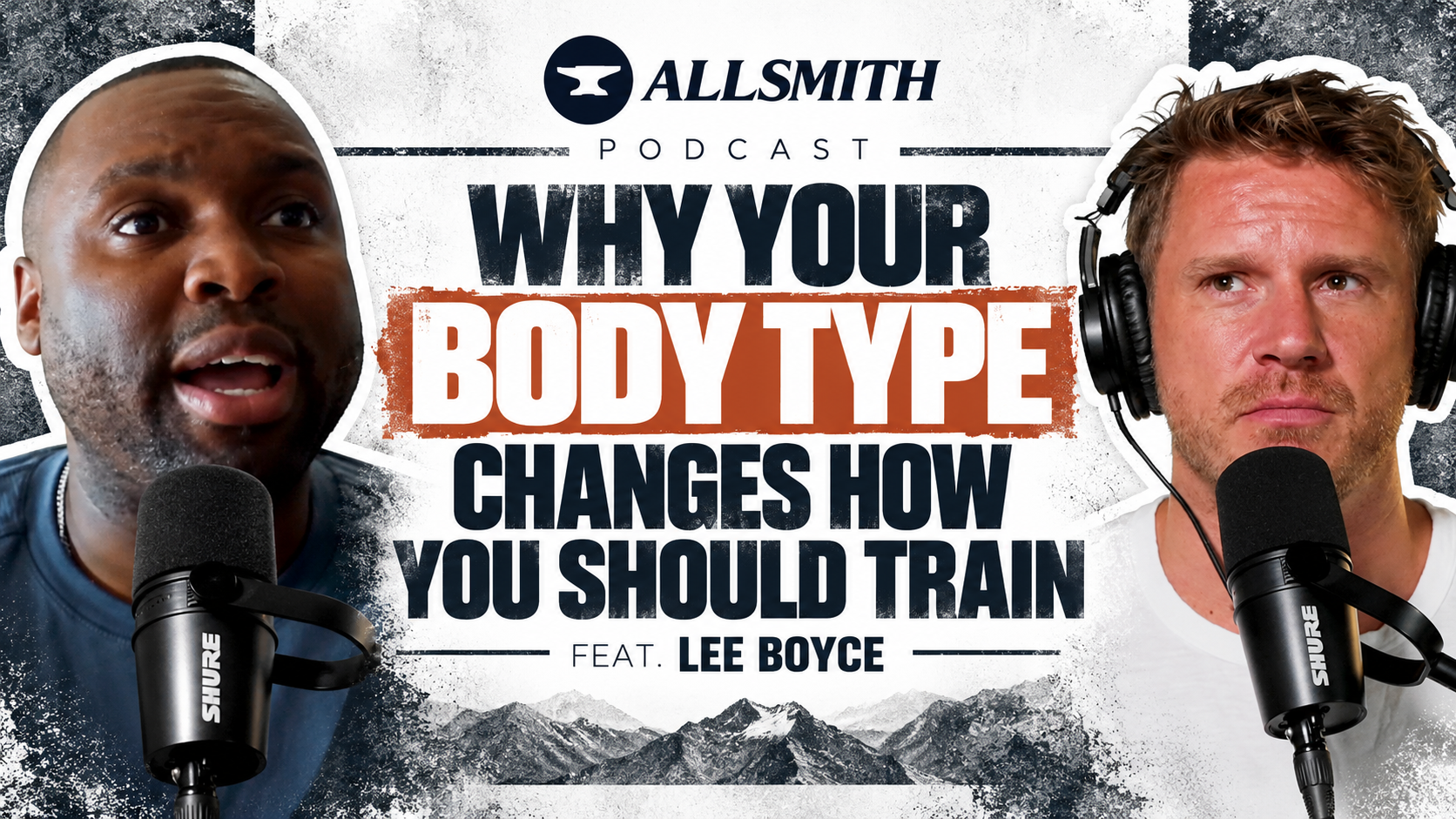
Coach Lee Boyce, Toronto strength coach and co-author of Strength Training for All Body Types, on what a double knee injury taught him about showing up and training the person in front of you.
Lee Boyce is a strength coach, educator, and writer based in Toronto. He was published for the first time at twenty-two, and he has posted Tall Guy Tuesday every single Tuesday for years, pandemic included. He is a former university sprinter and long jumper, and he knows exactly how much a lifter's proportions change the way a lift looks and feels.
He is also wary of the things that make fitness content go viral. He will not chase the algorithm or post a loud opinion he does not believe just for views. He is after a slow build, head down, work done, and he says he does not want the best things in his career to happen early.
In 2017, at thirty, that slow build got interrupted. Playing a game, he went up to dunk a basketball and ruptured both patellar tendons at once.
“I’ve gotta get back. There’s no negotiating this. This is who I am and what I do.”
That was his first thought. Not the pain, but the fact that training and fitness were all he had. There was no backup plan, which meant there was no room to botch the rehab. He had double reconstructive surgery, spent the summer in a wheelchair, then in straight braces, and was walking again by the fall.
For six months, he told almost no one. He did not post about it. He filmed videos from the waist up, went to physio, did his own rehab, and got back into the gym the moment he could. His goal was simple. With ten-inch scars hidden under his pants, he did not want anyone watching him move to know that anything had happened.
It was a blow, he says, especially for someone who felt invincible. But he is glad it happened at thirty, not at sixty and not at fifteen. And it changed how he coaches. He now knows what it feels like to have knees that swell, movements your body will not tolerate, and things that feel good today and cost you later.
The Lesson
Commit fully when the stakes are real. When his body broke, Lee did not negotiate with the work. He treated the comeback as the job and did not skimp on it, even though nobody was watching.
Then hold the rest loosely. He trains six days a week and still says he cares about it exactly as much as he should and no more. If he plans to train this afternoon and cannot, he does not lose sleep. He trains tomorrow. Perfection is the enemy of progress, and the lifter who obsesses over every detail often never gets the results.
The best program is the one built for the person in front of you. Pick the version of the movement your body can actually do, then keep doing it. And when a client shows up with a video of a stranger doing a lift, Lee does not lecture. He asks questions until they reach the answer themselves.
“I care about it just as much as I'm supposed to. I don't care about it any more than that.”
Lee Boyce
The conversation covers plenty more, from why tall and compact lifters should never compare numbers to why the safest advice for young athletes is to spend less time on the feed and more time around real people who have been through setbacks. Asked what he would put on a billboard, Lee said life is not about quotes about life.
You can find him at leeboyce.com and on Instagram at coachleeboyce, and his book, Strength Training for All Body Types, was published by Human Kinetics in 2023.
This Week's Question
What setback did you handle quietly, and who might have helped if you had let them see it?